




Related News


 16/17F, Emdoor Building, No.8 Guangke 1st Road, Pingshan District, Shenzhen


Artificial intelligence is evolving from simply answering questions to actually executing tasks. But in real-world use, one of the biggest limitations of today’s AI assistants is that they are often confined to a single device. Important files may be stored on a PC, archived on a NAS, captured on a phone, or generated by another connected device. This disconnect creates friction, slows execution, and prevents AI from becoming a truly continuous productivity system.
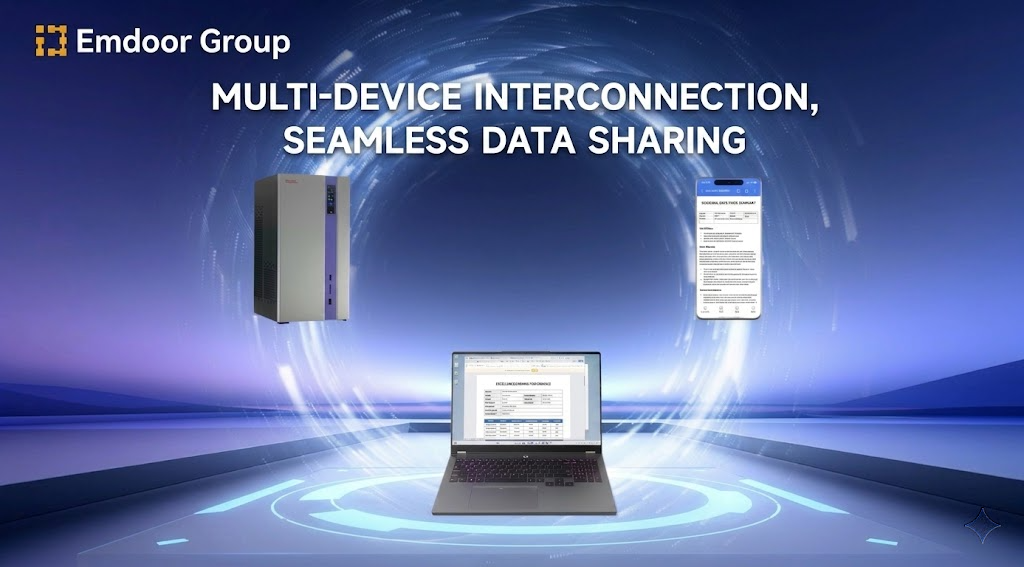
That is where Agent One comes in. Developed by Emdoor, Agent One is not just another AI assistant. It is an intelligent Agent hub and application framework designed for future multi-device collaboration. By connecting storage, computing power, models, and data across devices such as PCs, phones, NAS systems, and other connected endpoints, Agent One helps turn fragmented digital resources into a coordinated AI workflow.
It is built to make AI execution more practical, more private, and more adaptable to real operating environments.
Why Agent One Matters
Most AI assistants today can only access the data available on the device where they are running. In reality, however, the information users need is often distributed across multiple devices. This creates a gap between what AI can understand and what users actually need it to accomplish.
Agent One is designed to close that gap. Instead of treating each device as an isolated endpoint, it enables AI workflows to move across devices and use distributed resources more effectively. A task can begin on one device, continue on another, retrieve data from a third, and return results to the user through the most relevant endpoint.
This changes AI from a single-screen assistant into a multi-device execution system.
From “Can Answer” to “Can Execute”
The value of AI is no longer defined only by conversation quality. It is increasingly defined by whether AI can complete real tasks.
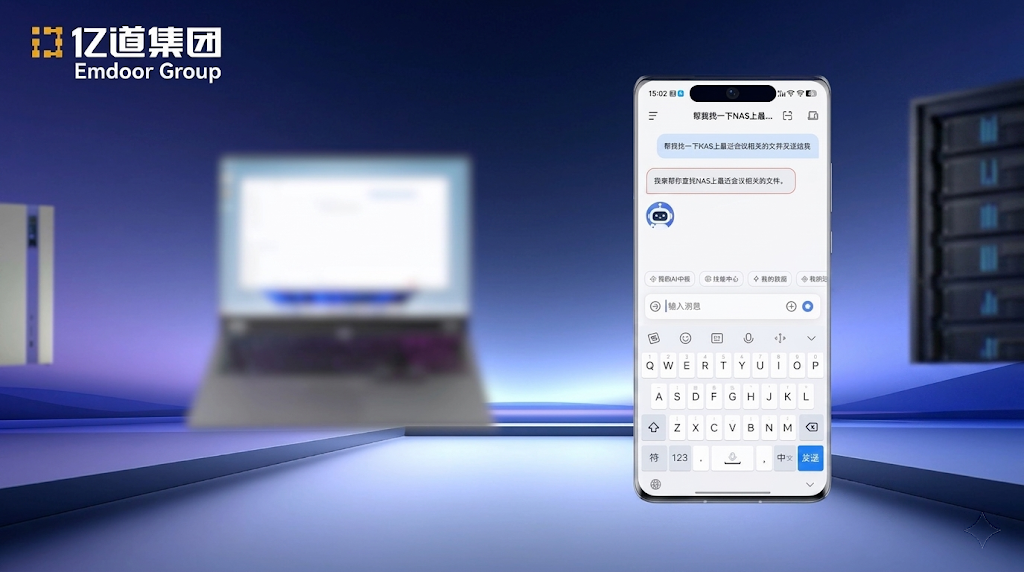
With Agent One, users can issue natural language requests, while the system interprets intent, breaks the task into executable steps, allocates the right resources, and manages task flow across devices. This may include retrieving files, calling local models, organizing results, syncing outputs, or handing execution from one device to another.
What makes this significant is not just the intelligence of the assistant, but the orchestration behind it. Agent One connects the fragmented stages of AI execution into one continuous workflow.
Privacy Protection Is Built In, Not Added Later
In many real business and personal scenarios, whether AI can be trusted matters just as much as whether it is smart. Sensitive data, local documents, and user interactions cannot always be handed over to the cloud without concern.
Agent One is designed with privacy protection and execution boundaries in mind from the beginning. Rather than relying solely on cloud-based large models and cloud-stored user interaction data, it prioritizes edge-side models and local inference where appropriate. This helps reduce unnecessary data exposure and improves control over how tasks are executed.
For users who need local processing, stronger privacy safeguards, or more realistic deployment options, this architecture offers clear practical value.
Multi-Device Connectivity Makes Tasks Continuous
One of Agent One’s biggest differences is that it does not treat devices as isolated islands.
A task can be initiated on a PC, confirmed on a phone, archived on a NAS, and reviewed again on another endpoint. Multiple devices can also contribute data simultaneously, allowing the system to collect, merge, process, and distribute results through a unified workflow.
For the user, this means the experience is no longer limited to separate screens and disconnected devices. Instead, the user interacts with one continuous AI system. Agent One receives the request, assigns execution nodes, retrieves required data, and returns the result to the current device. Tasks can also be resumed, managed, or extended from another device without restarting the process.
Making Better Use of Existing Computing Resources
Agent One is not only about connecting devices. It is also about making better use of the resources those devices already have.
Whether the available resource is a PC, a NAS, an edge computing box, or another connected endpoint, Agent One can bring those resources into the same collaborative system. Storage, inference, execution, and data access can then be organized more efficiently based on the role and capability of each device.
This means Agent One is not just a single application. It is a scalable intelligent hub that can continue to connect new devices, support unified management, and accelerate deployment across more scenarios.
Turning Local Data into Actionable AI Resources
In many real-world workflows, the most valuable information is not public cloud knowledge. It is the user’s own local data: files, project documents, photos, notes, archives, and accumulated digital history stored across different devices.
Agent One helps unify access to these distributed data resources and bring them into the AI execution flow. When cross-device content is needed, the system can retrieve relevant data on demand, validate access through secure mechanisms, and support controlled data transfer between devices.
This is more than simple file sharing between endpoints. It allows cross-device data to become part of AI task execution itself. As a result, AI no longer works only on a single input. It can begin to understand and use the user’s broader device-based data environment.

Choosing the Right Execution Path for Each Task
Not every task should be handled in the same way.
Another key strength of Agent One is its ability to choose a more suitable execution mode based on task type and device status. Lightweight tasks can be completed locally for speed. Sensitive tasks can be prioritized on the edge for privacy. More complex tasks can call on stronger nearby compute resources or cloud capabilities when needed.
This task-based scheduling model helps balance efficiency, privacy, cost, and user experience. It also makes AI more practical in real environments, where conditions, connectivity, and device availability are constantly changing.
Agent One as Part of Emdoor’s Broader AI Direction
Agent One also fits naturally into Emdoor’s broader AI direction. Emdoor’s existing public communications already emphasize edge AI, cloud-edge collaboration, and the shift from hardware products to scenario-based intelligent systems. Agent One extends that thinking into a more unified execution framework for multi-device AI collaboration.
To learn more about Emdoor’s broader AI direction, you can explore Emdoor Tech Day 2025: Redefining Productivity with Edge AI and Cloud Collaboration. You can also browse our latest updates in the News Center, learn more About Emdoor, or Contact Us for partnership and project inquiries.
Looking Ahead
The future of AI will not be defined by one device, one interface, or one execution model. It will be defined by how intelligently systems can coordinate data, models, and resources across the devices people already use.
With Agent One, Emdoor is building toward that future. By combining privacy-first design, multi-device collaboration, scalable resource integration, and flexible execution paths, Agent One represents a practical step toward a more connected and more useful AI experience.
It is not just an AI assistant. It is the beginning of a smarter multi-device AI hub built for the way people and businesses actually work.