



Related News


 16/17F, Emdoor Building, No.8 Guangke 1st Road, Pingshan District, Shenzhen


COMPUTEX 2026: Emdoor Showcases 5 Rugged AI Solutions for the Future of Intelligent Industries
From June 2 to 5, COMPUTEX 2026 opened in Taipei as one of the world’s most influential technology exhibitions for AI, computing, mobility, and next-generation innovation. Under the official theme of “AI Together,” this year’s event brought together global technology brands, solution providers, manufacturers, and industry professionals to explore how artificial intelligence is moving from cloud infrastructure into real-world devices, workflows, and vertical applications.
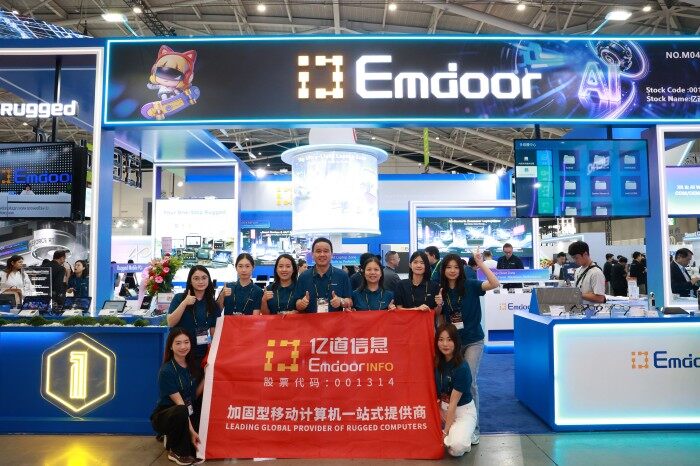
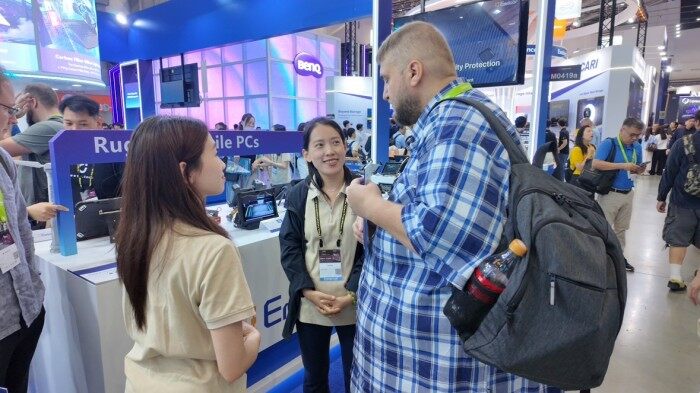
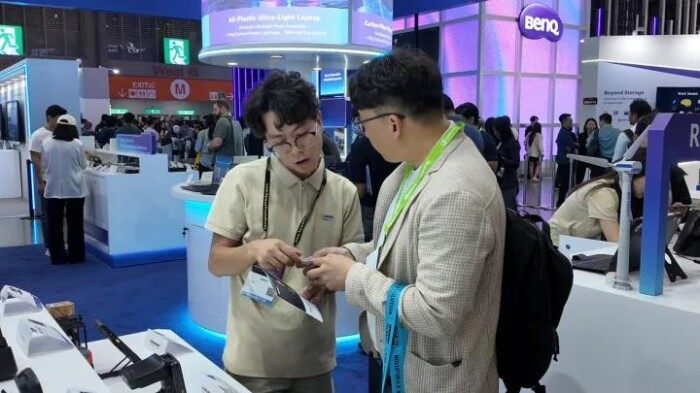
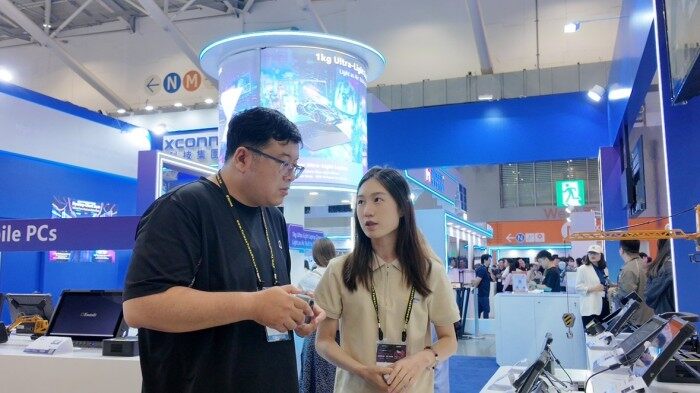
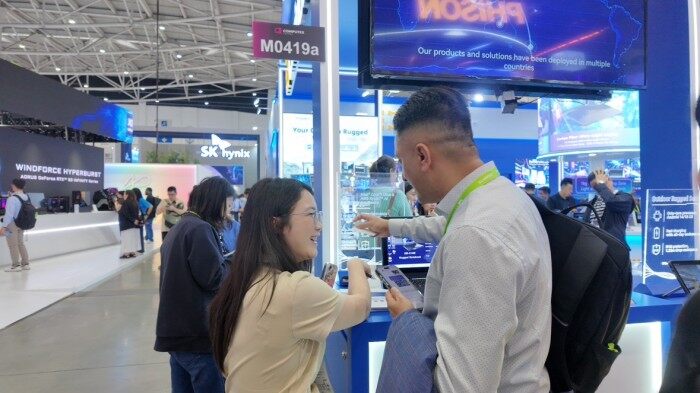
On this global stage, Emdoor Information, together with its rugged computing brand Emdoor Rugged, made a strong appearance at Taipei Nangang Exhibition Center Hall 1, Booth M0419a, presenting five scenario-based rugged AI solutions designed for intelligent industries. The showcase focused not only on product performance, but also on how rugged devices can solve practical problems in field operations, vehicle diagnostics, outdoor work, commercial services, and fleet management.
As AI adoption accelerates, enterprises are no longer asking only whether a device can connect to the cloud. They are asking whether the device can run AI tasks locally, protect sensitive data, operate reliably in harsh environments, and integrate smoothly with existing business systems. This is exactly where rugged AI solutions play a critical role.
At COMPUTEX 2026, Emdoor demonstrated how rugged computing devices can become the intelligent front end of industrial transformation.
Edge AI Is Moving from the Cloud to the Field
For years, AI applications were mainly associated with data centers, servers, and cloud platforms. However, real industrial environments are often far more complex. Field engineers may work in remote areas with unstable networks. Vehicle technicians need instant diagnostic results beside the car. Outdoor workers may face dust, rain, vibration, extreme temperatures, or potentially hazardous environments. Retail and hospitality teams need lightweight devices that can handle scanning, payment, identification, and service workflows without interruption.
In these cases, cloud-only AI is not enough.
Edge AI computing brings processing power closer to where data is generated. Instead of sending all information to a remote server, AI-enabled devices can process images, recognize patterns, assist decision-making, and support automation directly on the terminal. This improves response speed, reduces network dependency, enhances data privacy, and creates more practical value for industry users.
Emdoor’s COMPUTEX 2026 showcase reflected this direction clearly. The company presented rugged AI laptops, rugged AI tablets, vehicle diagnostic terminals, outdoor rugged devices, commercial service tablets, and vehicle fleet management terminals as part of a broader vision: making AI practical, reliable, and deployable in real-world environments.
1. Mobile AI Workstation: Local AI Deployment for Professional Workflows
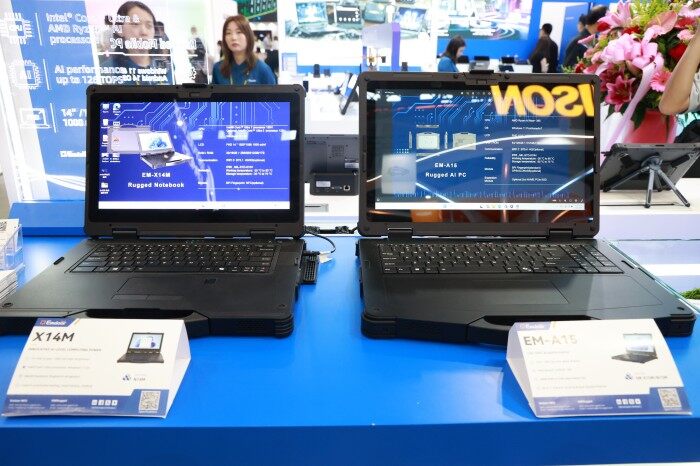
One of the key highlights at the Emdoor booth was the mobile AI workstation solution, represented by the EM-X14M rugged AI laptop, the EM-A15 rugged AI laptop, and the upcoming M10L rugged AI tablet.
The EM-X14M rugged AI laptop is powered by an Intel® Core™ Ultra 7 processor and features a dedicated AI engine. This enables the device to support mainstream AI models and local deployment of domain-specific AI models. For enterprises, this means AI capabilities can be used directly on the device without relying entirely on cloud connectivity.
In real-world operations, this local AI capability can support intelligent document processing, field data analysis, knowledge base interaction, equipment inspection assistance, and on-site decision-making. For teams working in energy, transportation, manufacturing, logistics, or public services, the ability to run AI locally can reduce latency and improve workflow efficiency.
Security is another major focus. The EM-X14M includes features such as a physical privacy shutter, RF shut-off shortcut, encrypted card expansion, fingerprint recognition, and NFC module support. These features help enterprises protect sensitive data while deploying AI in professional environments.
The EM-A15 rugged AI laptop further expands the performance ceiling. Powered by the AMD Ryzen™ AI MAX+ 395 processor, it delivers up to 126 TOPS of total AI computing power. With CPU and GPU collaboration, the EM-A15 is suitable for heavier AI workloads such as real-time visual inspection, medical imaging analysis, large-parameter model operation, and complex industrial data processing.
For mobile AI tasks, the upcoming M10L rugged AI tablet offers up to 97 TOPS of total AI computing power, making it suitable for AI-assisted field work, mobile inspection, intelligent maintenance, and data capture scenarios where portability and ruggedness are equally important.
Together, these products show how Emdoor is extending AI from fixed workstations to mobile rugged platforms.
2. Vehicle Diagnostics: Fixed and Mobile Modes for Smarter Maintenance
The second showcased solution focused on vehicle diagnostics, a field where rugged tablets are becoming increasingly important.
The M10A-VDS rugged tablet is designed specifically for vehicle diagnostic scenarios. It supports both fixed and mobile working modes. Technicians can mount the device on the steering wheel and connect it to the vehicle’s OBD-II interface through a VCI diagnostic device. They can also connect wirelessly to the VCI device for more flexible mobile testing.
This dual-mode design improves the efficiency of automotive workshops, fleet maintenance centers, roadside repair teams, and vehicle inspection services. Instead of relying on fragile consumer tablets or fixed diagnostic stations, technicians can use a rugged tablet that is designed for long working hours, workshop environments, and vehicle-side operations.
The M10A-VDS is deeply adapted for vehicle use and supports mainstream diagnostic protocols such as CAN and DoIP. It also provides rich interfaces to meet the requirements of different diagnostic tools and vehicle platforms.
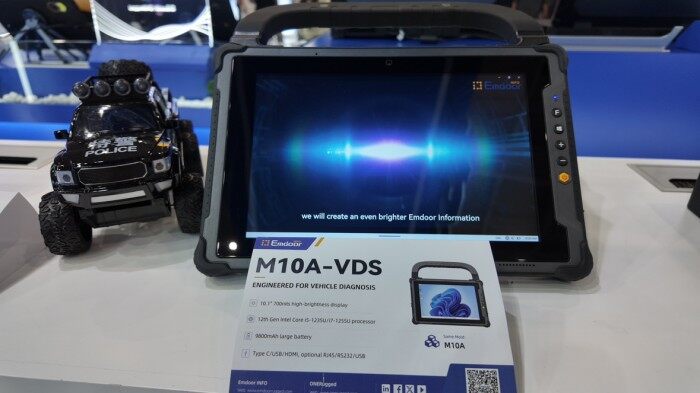
Battery life is another critical factor. With a 9800mAh main battery and an 860mAh backup battery, the device can support more than 12 hours of continuous operation. This helps technicians complete long diagnostic sessions without frequent charging interruptions.
For automotive service providers, the value of this rugged tablet for vehicle diagnostics is not only durability. It also helps standardize workflows, improve diagnostic mobility, reduce downtime, and support digital transformation in vehicle maintenance.
3. Outdoor Rugged Devices: IP68 Protection and Explosion-Proof Capability
The third solution focused on outdoor rugged devices, including rugged smartphones and rugged tablets designed for both outdoor enthusiasts and professional field workers.
Outdoor environments are unpredictable. Devices may face rain, dust, mud, accidental drops, direct sunlight, unstable power access, and long communication distances. For workers in construction, utilities, emergency response, inspection, agriculture, forestry, oil and gas, and hazardous industrial sites, equipment reliability is not optional. It directly affects productivity and safety.
Emdoor’s outdoor rugged devices are designed to address these challenges. The products support push-to-talk over cellular, reverse charging, ultra-high-definition cameras, high-brightness camping lights, and protection levels up to IP68. These capabilities allow users to communicate, capture images, provide emergency lighting, and keep working in difficult environments.
The T1 rugged tablet further supports explosion-proof characteristics for Zone 2/22 environments, making it suitable for certain high-risk industrial scenarios. This expands its use beyond general outdoor work into more specialized applications where safety compliance and equipment reliability are essential.
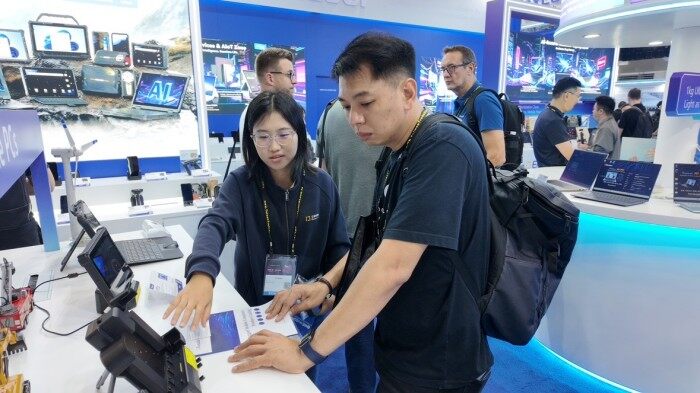
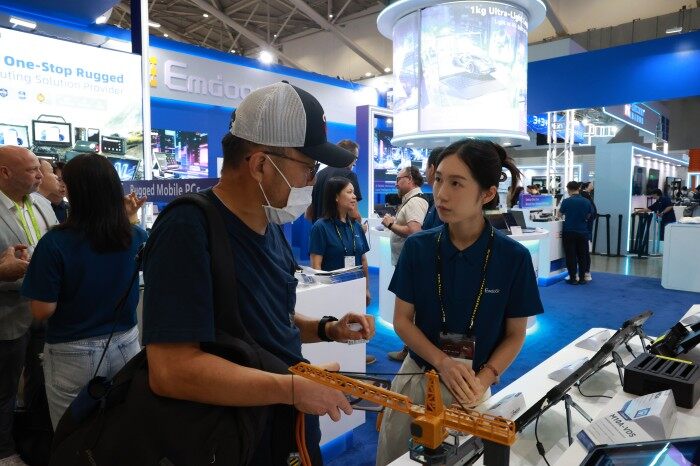
In SEO terms, this solution is highly relevant to users searching for IP68 rugged tablets, rugged outdoor phones, explosion-proof rugged tablets, and rugged devices for field workers. But beyond keywords, the real value lies in the device’s ability to support continuous work in conditions where standard commercial devices often fail.
4. Commercial All-in-One Rugged Tablet: Lightweight Design for Service Scenarios
Not every rugged device is used in extreme outdoor or industrial environments. Many businesses need devices that are lightweight, professional, durable, and flexible enough for commercial service workflows.
The fourth showcased solution was the EM-IS19N Windows lightweight commercial rugged tablet, designed for restaurants, retail stores, hotels, and other service-oriented business scenarios.
This tablet integrates a professional top-mounted scanning engine, an integrated NFC module, a fingerprint module, and dual Type-C ports. It can also work with card reader modules and multiple accessories, supporting different service tasks such as ordering, barcode scanning, identity verification, payment, and mobile office operations.
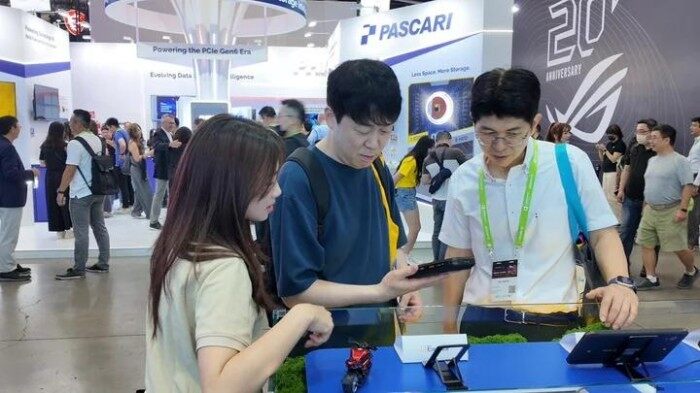

For restaurants, the device can help staff process orders and improve table-side service efficiency. For retail stores, it can support inventory checks, product scanning, membership identification, and payment-related workflows. For hotels, it can be used for check-in support, guest service, internal communication, and mobile management.
The key advantage of this type of commercial rugged tablet is balance. It does not simply pursue extreme ruggedness. Instead, it combines durability, portability, expandability, and business-friendly design. This makes it more suitable for service industries that need reliable devices but also care about user experience and workplace appearance.
As digital service scenarios become more complex, commercial rugged tablets can help businesses reduce device failure, improve frontline efficiency, and create more consistent customer experiences.
5. Fleet Management: Automotive-Grade Reliability for Transportation Operations
The fifth solution focused on fleet management, represented by the V82T vehicle terminal.
As the fourth generation of Emdoor’s vehicle-mounted terminal, the V82T is designed for transportation, logistics, public transit, tour buses, and fleet operation scenarios. Its rear camera is optimized for paper waybill capture, helping drivers and operators take clearer document images during daily work.
Vehicle environments are challenging for electronic devices. Terminals must handle vibration, power fluctuations, temperature changes, and long operating hours. The V82T includes multiple battery protection mechanisms to improve safety during driving. With a dedicated vehicle mount, it supports wide-voltage input, enhanced GNSS, a 3W speaker, RS232 expansion, and other rich interface options.
The device has also passed ISO 7637-2 and ISO 16750 automotive-grade tests, enabling it to operate reliably across both urban and rural road conditions. This makes the V82T suitable for fleet dispatching, driver communication, navigation assistance, vehicle data collection, route management, and transportation service digitization.
For fleet operators, rugged vehicle terminals are not just screens installed in vehicles. They are data entry points, communication hubs, and operational control nodes. When connected with backend systems, they can help improve route visibility, driver coordination, vehicle status monitoring, and service quality.
Why Rugged AI Solutions Matter for Intelligent Industries
The five solutions displayed by Emdoor at COMPUTEX 2026 reflect a broader industry trend: AI is becoming more practical, more mobile, and more deeply integrated into vertical scenarios.
For enterprise users, the most valuable AI device is not always the one with the highest theoretical performance. It is the one that can be deployed reliably, integrated smoothly, and used continuously in real workflows.
A rugged AI laptop must process data locally while protecting enterprise information. A vehicle diagnostic tablet must connect with automotive systems and survive workshop use. An outdoor rugged device must provide communication, imaging, lighting, and protection in harsh environments. A commercial rugged tablet must support service efficiency while remaining lightweight and user-friendly. A vehicle terminal must work safely and reliably in moving vehicles.
This is why rugged AI solutions require more than hardware specifications. They require a deep understanding of industries, working environments, user behavior, system integration, and long-term device management.
Emdoor’s showcase at COMPUTEX 2026 highlighted this scenario-driven approach. Instead of presenting isolated devices, the company demonstrated how rugged computing products can become part of complete industry solutions.
Emdoor’s Vision: Building the Intelligent Future with Edge AI and Rugged Computing
COMPUTEX is more than a product exhibition. It is a global platform where technology companies demonstrate how innovation can create real-world value. As AI continues to evolve, the next stage of competition will not be limited to cloud platforms or data centers. It will increasingly depend on how AI can be deployed at the edge, inside vehicles, across service environments, and in demanding field operations.
Emdoor Information will continue to deepen its investment in edge AI, rugged computing, and scenario-based product innovation. Through rugged AI laptops, rugged tablets, vehicle-mounted terminals, commercial service devices, and outdoor rugged solutions, Emdoor aims to help industry users build smarter, safer, and more efficient operations.
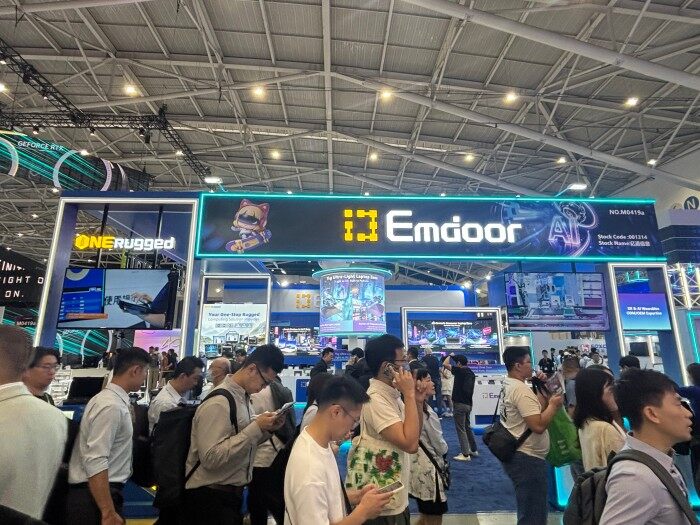
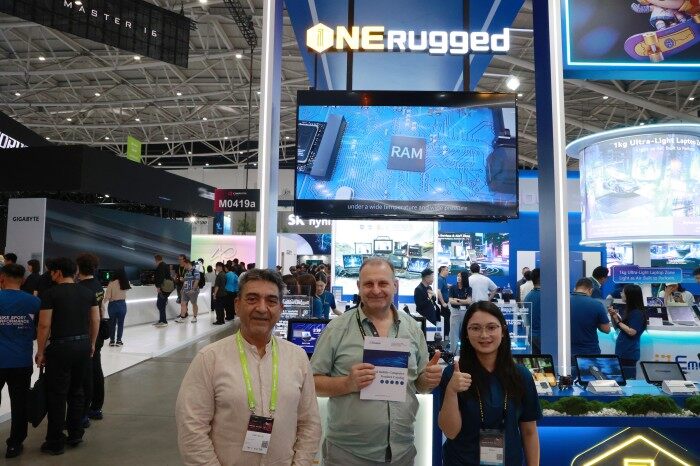
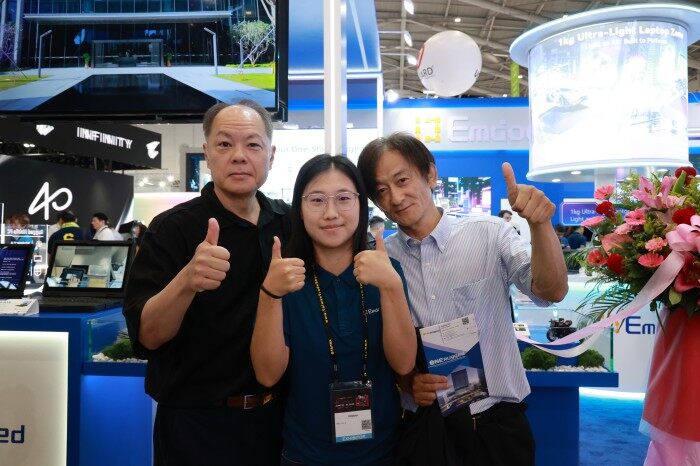
At COMPUTEX 2026, Emdoor welcomes global partners, system integrators, industry customers, and technology professionals to visit Taipei Nangang Exhibition Center Hall 1, Booth M0419a and explore how rugged AI solutions can support the future of intelligent industries.
As AI becomes increasingly integrated into field operations, vehicles, service points, and frontline workflows, Emdoor is ready to provide the rugged hardware foundation for a more connected and intelligent future.