



Related News


 16/17F, Emdoor Building, No.8 Guangke 1st Road, Pingshan District, Shenzhen


Technology Insight
What Is Ailyn? How Emdoor Enables Multi-Device AI Collaboration
Ailyn is Emdoor's AI intelligence hub designed to connect devices, local data and AI models. Built around an on-device-first architecture, multi-device collaboration and device-cloud orchestration, Ailyn aims to move AI beyond conversation and turn it into an intelligent system capable of understanding context, accessing resources and completing real-world tasks.
Today's AI models are increasingly capable of reasoning, generating content and understanding complex instructions. Yet in many everyday and industrial scenarios, using AI still requires people to manually collect data, upload files, switch between devices and repeatedly provide context.
The challenge is no longer only whether AI can think. It is whether AI can securely access the right data, understand the surrounding environment and coordinate the devices required to complete a task.
This is the problem Ailyn AI is designed to address.
Why Can Powerful AI Still Feel Difficult to Use?
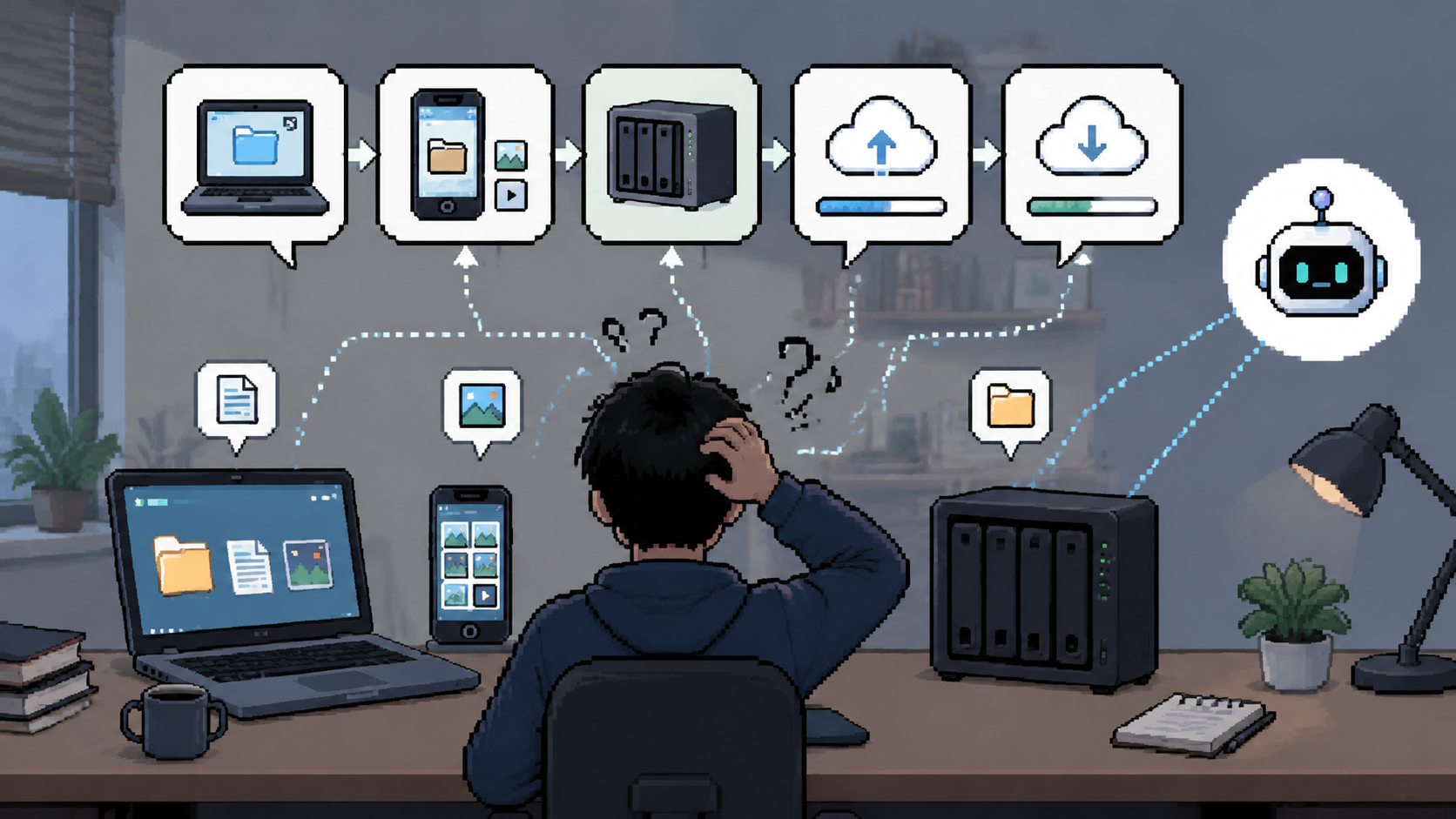
Consider a simple example. A user may have information distributed across a smartphone, computer, wearable device and other connected equipment. To ask an AI system to analyze that information, the user may first need to export records, transfer files and manually organize the data.
A task that should theoretically require one instruction can instead become a multi-step workflow.
Similar limitations exist across offices, homes and industrial environments. Devices continuously generate useful data, but that information is often isolated from AI models and from other devices.
A large language model may know how to solve a problem, but without access to local context it may not know where the required data is located, which device can provide it or which resource should execute the next action.
For Emdoor, the next stage of intelligent computing is therefore not simply about making AI better at answering questions. It is about enabling AI to understand context, connect devices, access resources and execute tasks.
Ailyn: Your Multi-Device AI Intelligence Hub
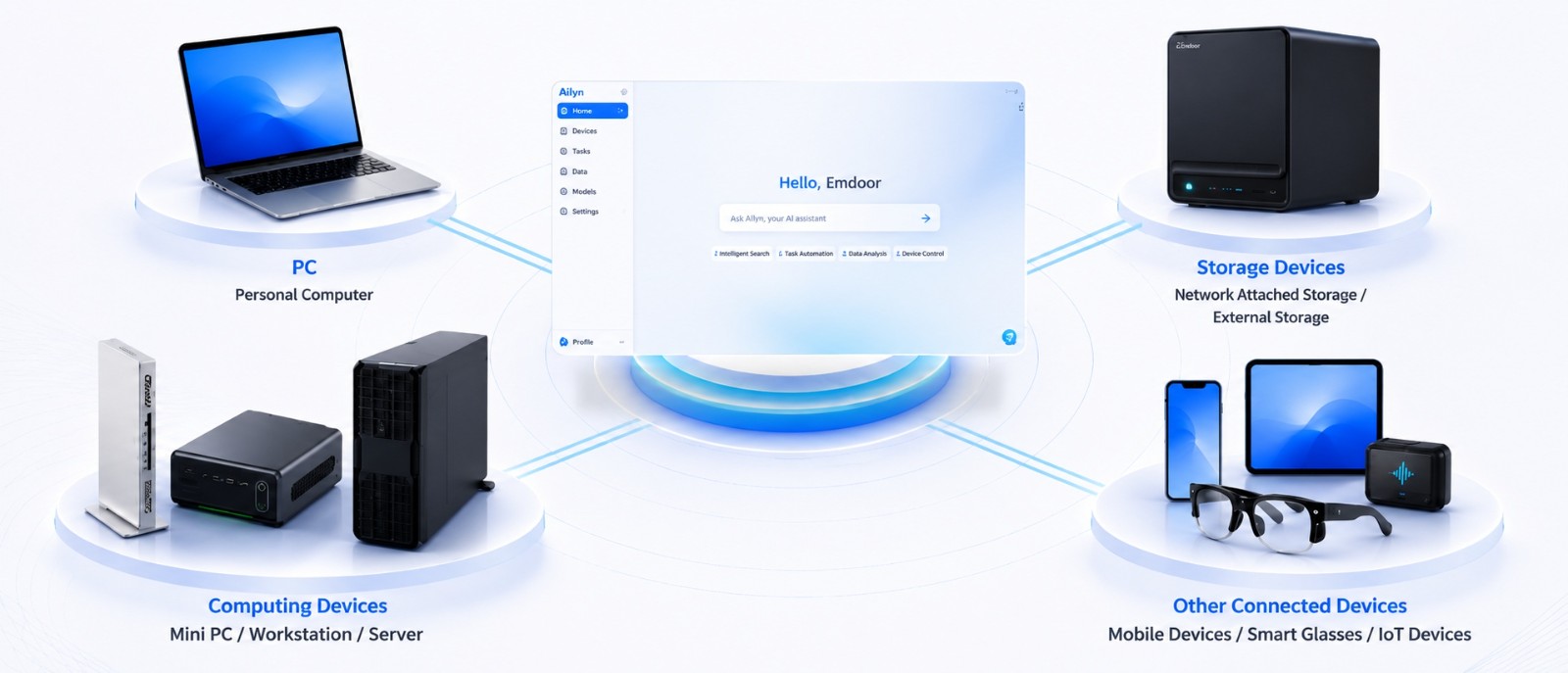
In one sentence: Ailyn connects devices, data and AI models so that AI can understand user intent, access nearby resources and complete real tasks rather than remaining isolated in the cloud.
Ailyn Multi-Device AI Intelligence Hub
Ailyn is designed for a future in which people interact with multiple intelligent devices rather than a single AI endpoint. It breaks down isolated device environments and transforms distributed data, computing resources and hardware capabilities into a coordinated AI experience.
This direction also complements Emdoor's growing rugged and edge computing portfolio, where AI-capable devices can increasingly serve as local intelligent endpoints in industrial and field environments.
On-Device First: Bringing AI Closer to Users
Traditional AI services commonly rely heavily on cloud computing. Ailyn follows a different principle: when appropriate, processing and task execution should happen on the user's local device first.
By moving suitable AI workloads closer to where data is generated, the device itself becomes part of the intelligent system rather than simply acting as an interface to a remote cloud service.
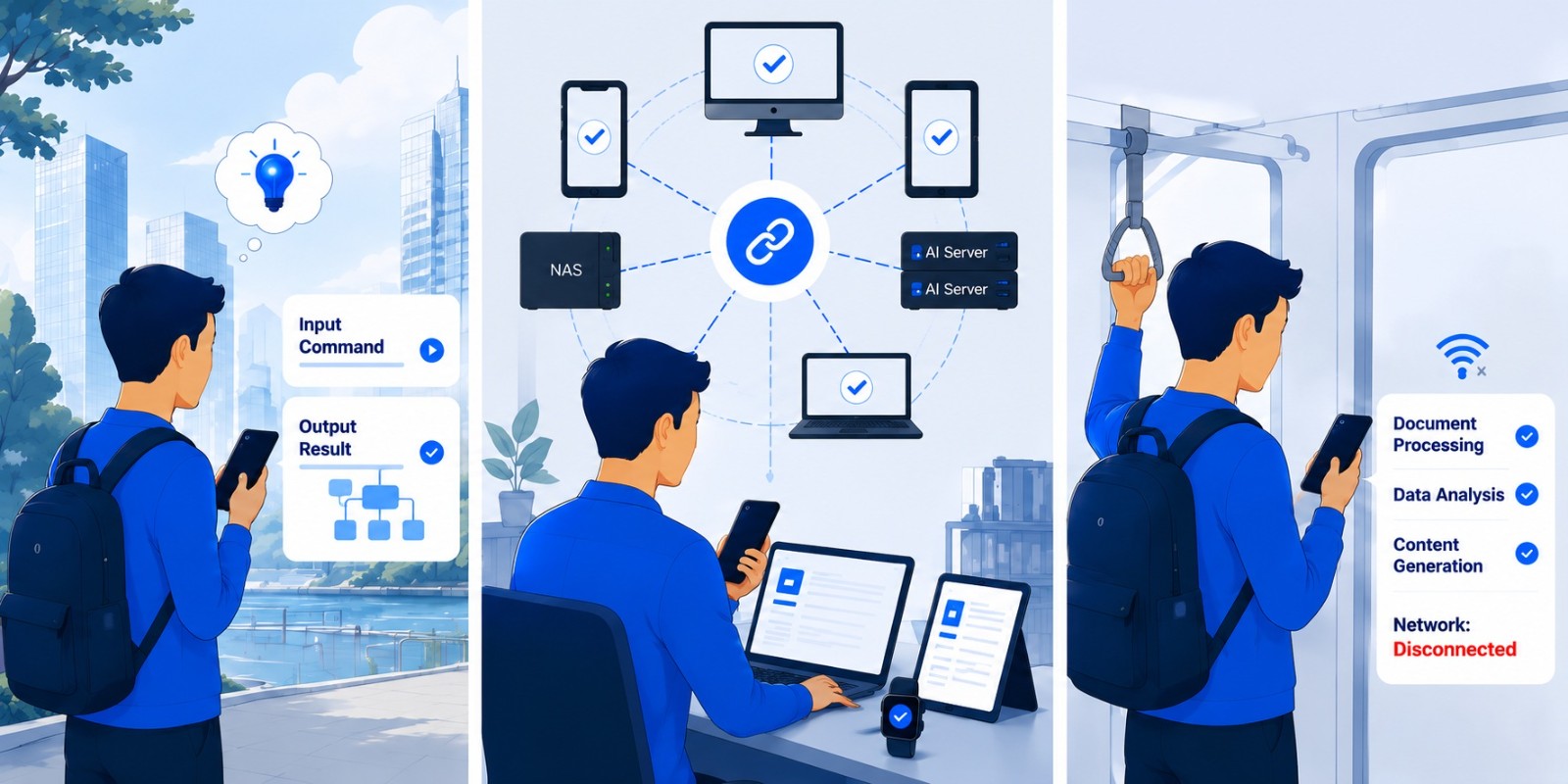
01 On-Device Models First
Optimized local models and inference acceleration allow frequent or sensitive workloads to be processed locally whenever appropriate.
Optimized local models and inference acceleration allow frequent or sensitive workloads to be processed locally whenever appropriate.
02 Greater Privacy Control
Local processing can reduce unnecessary data movement while permissions and task execution remain under defined access controls.
Local processing can reduce unnecessary data movement while permissions and task execution remain under defined access controls.
03 More Efficient Resource Use
Ailyn can match workloads with appropriate local and cloud resources to improve overall computing efficiency.
Ailyn can match workloads with appropriate local and cloud resources to improve overall computing efficiency.
04 Lower Latency
Processing data locally can shorten the path between input, inference and action for faster response.
Processing data locally can shorten the path between input, inference and action for faster response.
05 Offline Capability
Selected AI functions can remain available in limited-network or offline environments, helping critical workflows continue.
Selected AI functions can remain available in limited-network or offline environments, helping critical workflows continue.
On-device AI becomes particularly important in industrial and field deployments where network quality, response time and local data processing can directly affect workflow efficiency.
Hardware such as the EM-A15 Rugged AI PC demonstrates how increasingly powerful CPU, GPU and NPU resources can enable local AI inference and demanding edge AI workloads outside traditional data centers.
Multi-Device Collaboration: Breaking Down Device Silos
On-device intelligence solves only part of the problem. Modern work and everyday life frequently span multiple devices, each with different data, sensors, interfaces and computing capabilities.
Ailyn's second core capability is therefore multi-device collaboration: connecting distributed devices into an intelligent network in which tasks can access data and execute actions using the most appropriate device.
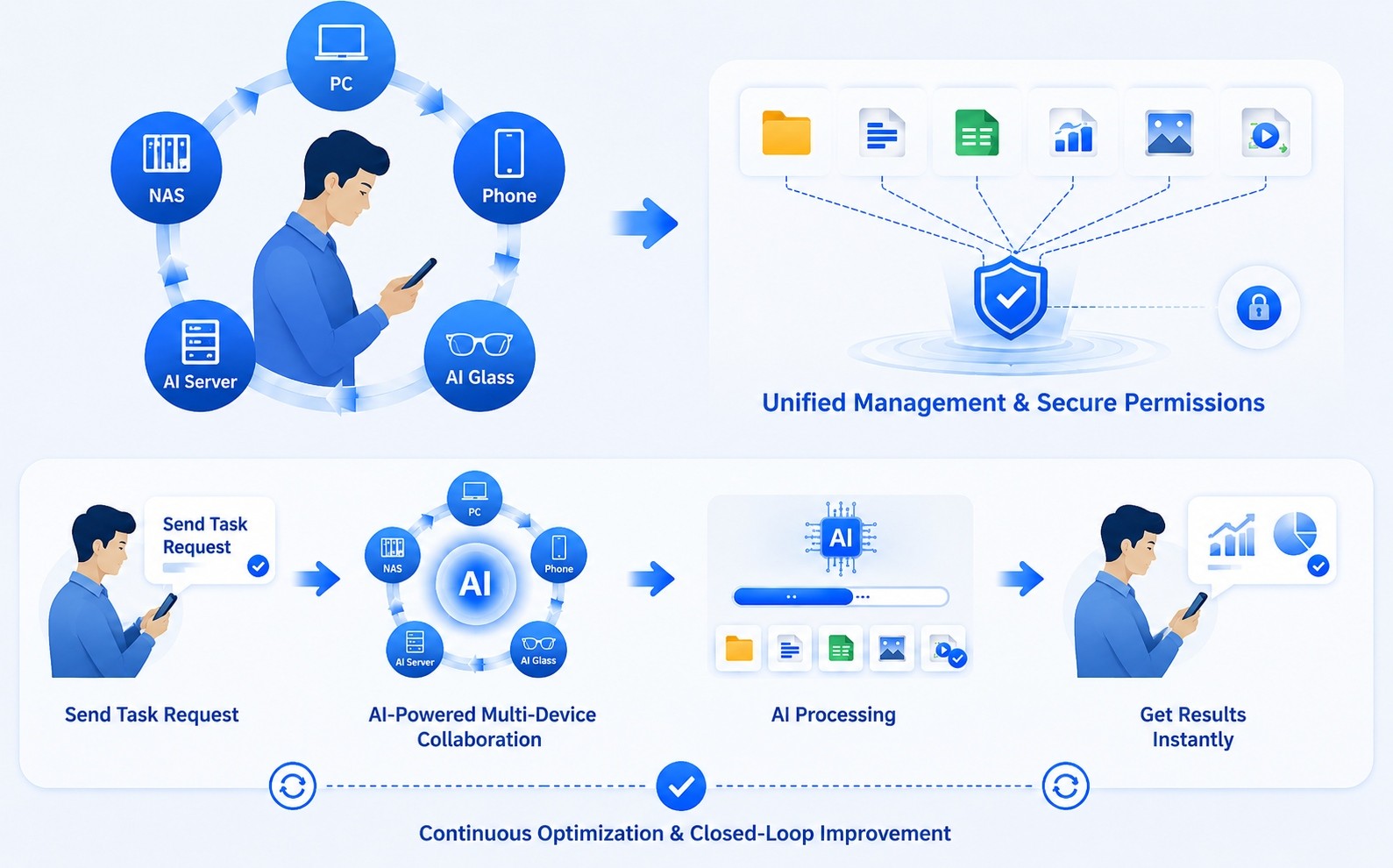
Multi-Device AI Collaboration
01. Distributed Connectivity and Data Access
Information can be accessed across connected endpoints rather than remaining isolated inside individual devices.
Information can be accessed across connected endpoints rather than remaining isolated inside individual devices.
02. Continuous Cross-Device Tasks
Tasks can move between devices while maintaining progress, status and results.
Tasks can move between devices while maintaining progress, status and results.
03. Long-Term Local Data Retention
Task results and relevant local information can be retained to support longer-term intelligent workflows and model optimization.
Task results and relevant local information can be retained to support longer-term intelligent workflows and model optimization.
04. Unified Multi-Model Management
Different models can be selected and coordinated according to task requirements.
Different models can be selected and coordinated according to task requirements.
05. Shared Computing Resources
Available computing capability across multiple endpoints can be coordinated as workloads expand.
Available computing capability across multiple endpoints can be coordinated as workloads expand.
06. IoT Connectivity
Connected IoT devices can become part of broader AI-driven task workflows.
Connected IoT devices can become part of broader AI-driven task workflows.
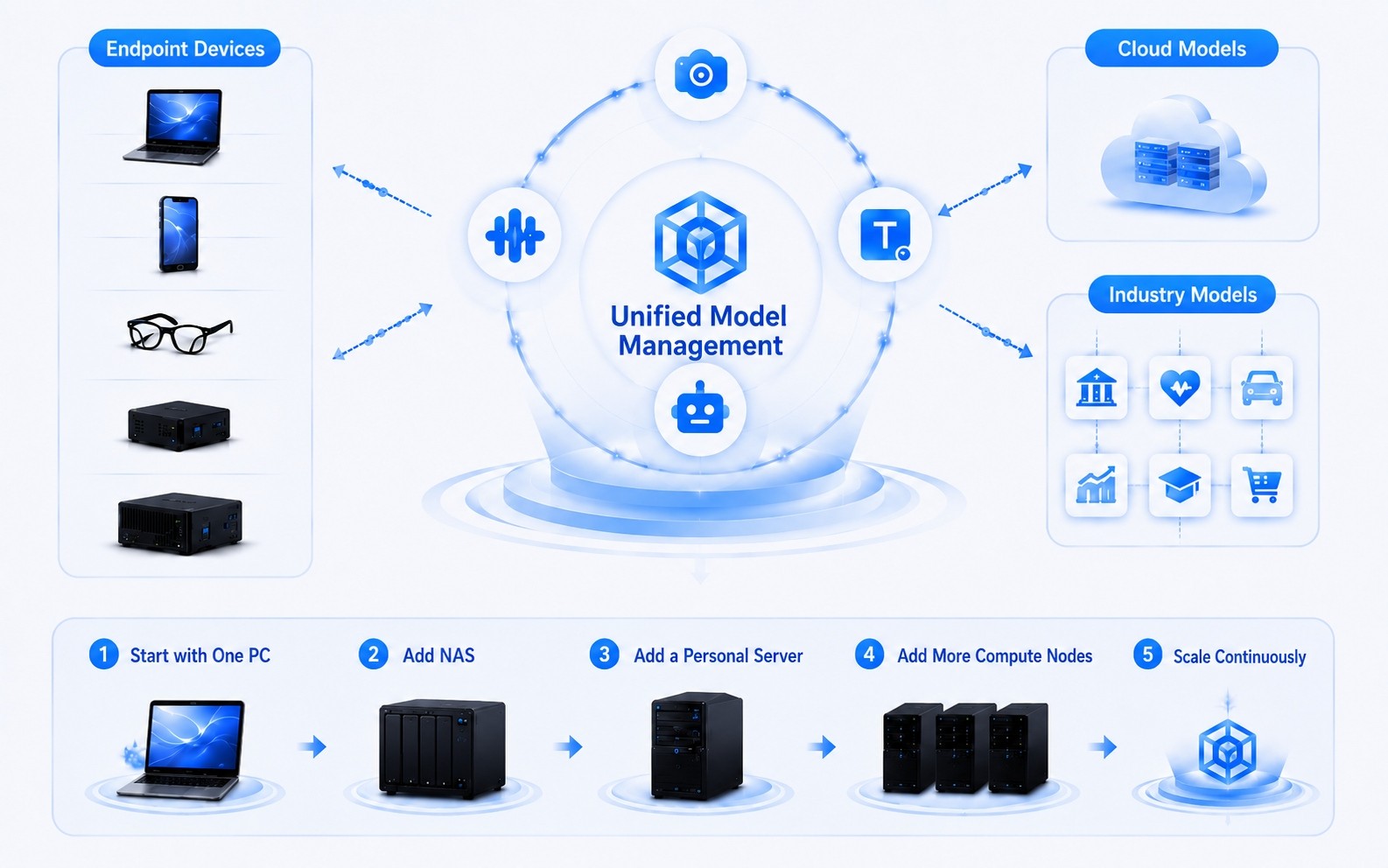
In industrial environments, this concept can extend to rugged computers, industrial terminals, sensors, machines and other edge devices. Emdoor's industrial computing platforms provide another hardware foundation for distributed edge and industrial AI applications.
Device-Cloud Collaboration: Local First, Cloud Enhanced
Local hardware has practical limits in computing performance, storage and model size. For this reason, Ailyn does not treat local AI and cloud AI as competing approaches.
Instead, it uses a local-first, cloud-enhanced architecture.
Suitable tasks can be completed locally for faster response and greater control, while more complex workloads can access cloud models and larger computing resources when needed.
01 Local Execution
Tasks are processed on local devices, keeping relevant processing close to the endpoint.
Tasks are processed on local devices, keeping relevant processing close to the endpoint.
02 Automatic Hybrid Execution
AI can coordinate local and cloud resources according to the complexity and requirements of the task.
AI can coordinate local and cloud resources according to the complexity and requirements of the task.
03 Cloud Execution
Complex workloads can use cloud models and additional computing resources when greater capability is required.
Complex workloads can use cloud models and additional computing resources when greater capability is required.
This hybrid approach is intended to balance responsiveness, computing capability, privacy requirements and resource efficiency across different scenarios.
From AI Models to Real-World Intelligent Workflows
In July 2026, Ailyn was presented at the World Artificial Intelligence Conference (WAIC), where Emdoor demonstrated its AI strategy across personal, home, enterprise and industrial scenarios.
The underlying direction is clear: AI needs to move beyond isolated applications and become part of real workflows.
From secure on-device processing to multi-device orchestration and dynamic device-cloud collaboration, Ailyn represents Emdoor's exploration of how AI can become more deeply integrated into everyday work, industrial operations and connected environments.
At the hardware level, Emdoor is simultaneously expanding its rugged AI computer portfolio. Products such as the EM-A14 Rugged AI PC and EM-A15 provide local AI computing resources for professional, field and industrial applications.
Ailyn: Making AI Useful Across Devices
The future of AI will not be defined only by larger models. It will also depend on how effectively intelligence can access data, coordinate devices and turn decisions into actions.
With an on-device-first architecture, multi-device connectivity and device-cloud collaboration, Ailyn is Emdoor's approach to building an AI intelligence hub that brings models, computing resources and real-world endpoints together.
Explore Emdoor Rugged computing products or contact our team to discuss edge AI and rugged computing requirements for your project.